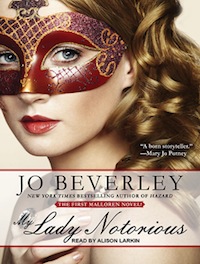
I’m at AudioGals today reviewing My Lady Notorious by Jo Beverley, narrated by Alison Larkin. I enjoyed this one but have reservations about the performance of Rothgar.
Musings on Romance
I’m at AudioGals today reviewing My Lady Notorious by Jo Beverley, narrated by Alison Larkin. I enjoyed this one but have reservations about the performance of Rothgar.
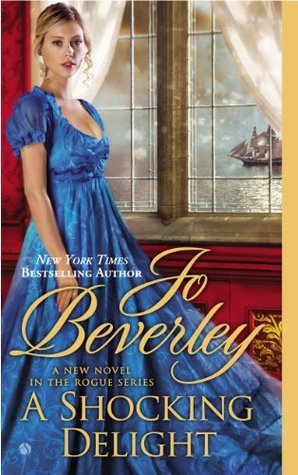 Why I read it: I bought it because: Jo Beverley and because: Company of Rogues. Duh.
What it’s about: (from Goodreads) The man she shouldn’t want. The woman he shouldn’t marry…
David Kerslake, smuggling master from The Dragon’s Bride, is now Earl of Wyvern and must survive the ton as well as the Preventive Officers.
Lucy Potter, daughter of a wealthy merchant, is more interested in trade than in the men after her dowry. When forced to have a London season, she sets out to enjoy herself rather than to find a husband. But once she meets the notorious Earl of Wyvern, her resolve weakens, and when they kiss, it dissolves—even though her instincts warn he’s dangerous.
Wyvern has a dark secret, which means he must win a rich bride. Lucinda Potter seems ideal. Not for her beauty and her lively charm, but because at first meeting she seems unlikely to realize the truth.
As he comes to know her, however, as they spar and kiss, he realizes she’s too clever and honest by far. Marrying Lucy would mean living a lie with the woman he has come to love….
What worked for me (and what didn’t): It’s been 7 years since I read a Rogues book. Not all of the Rogues feature here and most of them aren’t on page very much. Nicholas Delaney does his usual machinations to make things turn out right but once he’s done his deed, he’s out of the story too. It was nice to visit with the Rogues again but I can’t say this book was particularly memorable for me. There wasn’t all that much keeping Lucy and David apart and when they are faced with a problem, acting like the sensible adults they are, they talk about it frankly – and the obstacle is thus quickly resolved. That meant, as much as I appreciated they were grown ups who could communicate, the tension quotient in the story was low.
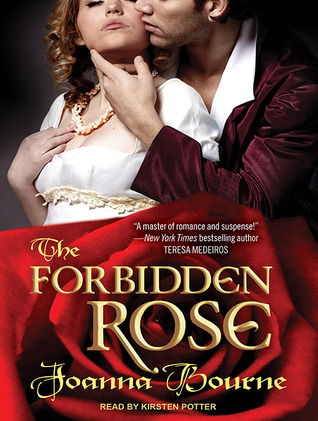 Why I read it: I received a copy of the audiobook as a gift.
What it’s about: (from Goodreads) A glittering French aristocrat is on the run, disguised as a British governess. England’s top spy has a score to settle with her family. But as they’re drawn inexorably into the intrigue and madness of Revolutionary Paris, they gamble on a love to which neither of them will admit.
What worked for me (and what didn’t): I briefly reviewed the print version of this book back in March 2011.
I said then:
I’ve had this one on my TBR for ages and I really don’t know what took me so long to read it. However, inspired by the DABWAHA tournament, I decided to pick it up. I’m very glad I did. This is kind of a prequel to Bourne’s first book, The Spymaster’s Lady. Set shortly after the revolution in France, it follows the story of English spy Doyle and French aristocrat Marguerite. Bourne has such a wonderful touch with prose. You can tell when the point of view is from an Englishman or a Frenchwoman – there’s just something in the way the words are placed which make it obvious. And her phrasing, the pictures painted with words are just beautiful. Here’s a couple I particularly noted:
She could become lost in this man, in territories of amazement, countries of sensation.
and
She did not rush to fill the silence up, in case LeBreton might have a use for it.
The connection between the characters, how they related to one another and saw through one another and did not jump to misplaced conclusions about one another was refreshing and much appreciated. At the start of the book, both the hero and heroine are pretending to be someone else – but rather than making it the obvious “Big Mis” story, Ms. Bourne told another (and much more satisfying) tale. I was so inspired, afterwards, I went and read The Spymaster’s Lady again and then I ordered My Lord & Spymaster too. When I checked the author’s website, I was happy to see that Adrian’s story is coming out later this year. I’m very much looking forward to his story – we meet Justine (his lady) in The Forbidden Rose.
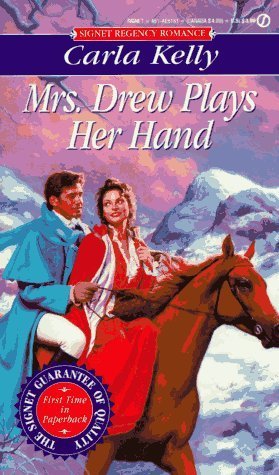 Why I read it: My good friend Merrian gave this book to me when she last visited Adelaide. I started reading it on the plane when I headed to Sydney for the ARRAwards on Saturday 22 March. (Sadly, the Australian aviation authorities haven’t got with the programme and they still make you turn off your electronic devices for at the beginning and end of flights. If you’re stuck on the runway for a while, you’re outta luck if the only book you have with you is digital. On the other hand, it did lead me to pick up a paper book and it was good, so there’s that.)
The picture to the left is the cover of the version I have but the happy news is that the books have been digitised and re-published by Cedar Fort Inc and are at most etailers.
What it’s about: (from Goodreads) Playing with Fire — Young widow Roxanna Drew was fair game in the sport of cads. Her suddenly impoverished state made her as vulnerable as her beauty made her tempting to men with more money than morals. Lord Marshall Whitcomb, who held her purse strings in his pawing hands, was intent on luring her into his bed. But even more dangerous was Lord Winn, who owned the dwelling where she sought refuge. The dashing lord reminded the widow that the lure of sharing a warm bed on a winter’s night might indeed be worth the risks.
Lord Winn had trusted one woman and been betrayed. That disastrous marriage had endowed him with a wariness of females in general, and prospective wives in particular. But when the door to the dower house on one of his estates was opened by a woman with a cautious smile and memorable brown eyes, he knew here was danger to avoid at all costs — if he really wanted to…
What worked for me (and what didn’t): I haven’t read a lot of historical romance lately and much of that is to do with my mood. So when I do read a HR book and I love it, I think it says something. Not quite that it starts in negative territory, but that it has to scale a divide between my expectations (of “meh”) and reality. It has to change my mind. This book succeeded by page 2. (Literally, I was on a plane, wiping my eyes because there were tears – on page 2!!!)
Roxanna Drew is a widow with two young daughters. Her beloved husband Anthony had been the local vicar and he had died after a long and unspecified illness. She has been allowed to stay in the vicarage for six months but she knows that she and her children will have to move and leave behind the memories they all have of Anthony in that place. The set up is so well done. The brush strokes so deft, that in no time at all, I was empathising with Roxanna. She doesn’t spend much time wallowing and mired in grief – I admired her right from the start (I expect I would wallow, get stuck and stay there), because she tells herself to buck up and get on with things for the sake of her girls. Her philosophy and the book’s title are explained thusly:
She leaned against the windowpane, and thought of the everlasting card games she had played with her brothers when they were growing up in Kent. They showed her no mercy, compelling her to play terrible hands to the end, instead of folding the cards and running away to her dolls. At first she cried and complained to Mama, but then she learned to play the hand dealt to her. Sometimes she won, sometimes she lost, but she never threw down a hand dealt again.
 **NB – this review first appeared in the March ARRA members newsletter**
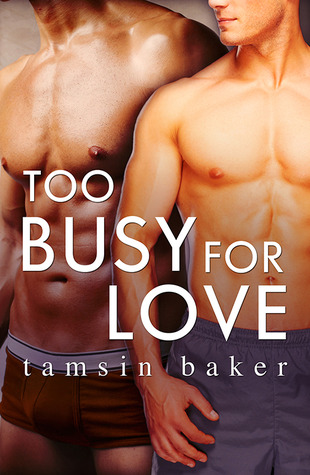
Too Busy for Love by Tamsin Baker – C- Too Busy for Love is a short (about 35 reading pages) erotic m/m novella featuring rich mergers and acquisitions man – Thomas and a younger architecture student/part time gardener, Luke.
Even though Australian spelling it used (eg mum), the book is set in America. I think Luke is about 19 or 20 – he is two years away from an architecture degree. The bonus for him working at Thomas’ estate is access to the extensive library for study after work. When Thomas stumbles across Luke late one night, he is instantly attracted and promptly propositions Luke. Luke hesitates because he’s not sure he’s gay.
Thomas doesn’t usually do any form of relationship and prefers no-strings sex but Luke has him thinking about other things.
I admit I was troubled by the idea that having sex in itself is the identifier of sexuality. I believe sexuality is more complicated than that. I also found it a bit unlikely that this 19/20 year old man would not have checked out a bit of gay porn on the internet, perhaps done a little solo experimenting – but apparently he has not. There is also a bit of pronoun abuse – when the main characters are both men it can sometimes be confusing which “his” we are reading about.
It is a very short story so there isn’t a lot of time for deep characterisation or deep discussion of sexuality issues either for that matter. I think it works better as an erotic story because most of the page count is filled with pretty hot sexual encounters between Luke and Thomas.
I didn’t really see them fall in love. I didn’t see why they fell in love. I saw why they were attracted and their definite sexual chemistry. The story does have a romantic epilogue – I wouldn’t have minded having more details about their relationship apart from sex within the story though.

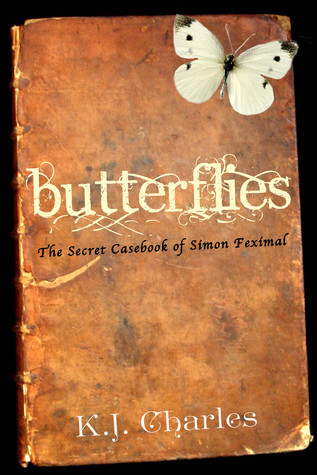
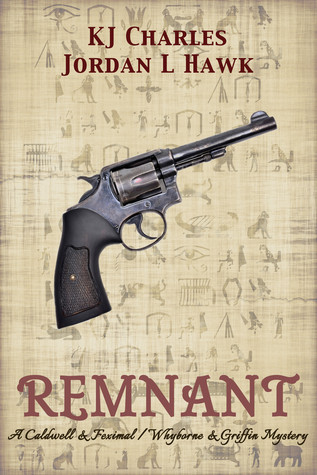
Why I read them: There are three short stories in this series (so far). The first I bought for $1.99 from Torquere Press. It’s too expensive because it’s less than 15 pages. But the good news is that the other two self-published shorts are free from Smashwords in all the formats. Taken together, $1.99 is well worth it. And I think The Caldwell Ghost has possibly my favourite opening paragraph ever.
What it’s about: (from Goodreads) When Robert Caldwell inherits a haunted house, he calls on ghost-hunter Simon Feximal to rid him of the supernatural menace. But the ghost is stronger than either man realizes — strong, angry, and desperate for release. Trapped in a haunted house with a dangerously attractive ghost-hunter and a sexually frustrated spirit, can Robert survive the night intact…and will he want to?
What worked for me (and what didn’t): This clever little short has an absolute cracker of an opening paragraph. We are plunged into the action immediately. It’s only about 13 pages but in that time, the setting – both the time period and the creepiness and the characters are drawn with a deft hand. It’s not a romance, but rather the pair meet and, while fixing Robert Caldwell’s ghost problem, have a sexy interlude which promises to be more. We know in fact that they go on to have a very HEA because of the letter to the editor at the beginning. It’s all very cleverly done.




© 2026 Kaetrin’s Musings
Theme by Anders Noren — Up ↑