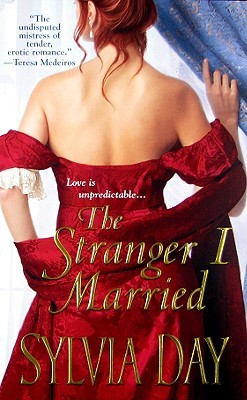
 First off, I’ve decided to start experimenting with review formats til I find the one that suits me best. So, please bear with me while I play.
Second, can I just say that I like this cover much better than the one on the trade paperback issue (you can check it out here if you want).
I was blog hopping the other day and came across a review of this book which reminded me that I had meant to read it. Sadly, I can’t now find that particular blog (grr) which is disappointing, because I enjoyed the review and wanted to check it out again… oh well, maybe I’ll stumble across it again one day and actually Bookmark it this time!
I remember being intrigued by the premise of this story when it first came out but, not having read anything by this author before, I didn’t want to plonk down $30AUD for a trade paperback on a “maybe”. Then, it came out in MMP and – I forgot, I guess. Happily with my ereader and the current exchange rate, taking a chance on a new-to-me author became a lot cheaper – about $8AUD instead of about $18AUD for a paperback. (Education on Australian book prices for non Australians over).
Now to the review (still hanging in?):-
What It’s About
Isabel, Lady Pelham (or, Pel), is a widow who enjoys her freedom. She has no wish to re-marry but her lovers keep falling in love with her and wanting to marry her (such a problem!). Gerard Faulkner, Marquess of Grayson (Gray) is a certified rake who wants to annoy his mother by marrying someone unsuitable (his mother is a real bitch, no, really). Gray puts an offer to his friend Pel – they will solve each other’s problems by marrying. The marriage is based on genuine friendship but is essentially in name only – they will each be free to pursue relationships (or, for Gray, just sex) elsewhere. In fact, he is quite keen for her to continue her lifestyle because this will bother his mother even more.
Gray loves a dainty miss (Emily), his childhood sweetheart, who is married to someone else and falls pregnant with his (Gray’s) child. (Notwithstanding his feelings for Emily, Gray still enjoys physical relationships with other women – something about her is too dainty and ladylike for him to let his inner cave man out.)
When Emily dies in childbirth, Gray is devastated by the loss of both mother and child and leaves London.
The story picks up 4 years later, when Gray returns from his self-imposed exile a changed man. (From the blurb on the book, I got the impression that he came back to have a proper marriage with Isabel but actually he comes back to face his responsibility to her – he realises that she is the subject of scorn and gossip and his desertion has made things harder for her.) However, on his return, he finds himself sexually attracted to Isabel in a way he wasn’t previously and he decides to pursue her. Initially he doesn’t really think about the future – issues of fidelity aren’t really on his radar – pretty much he just thinks it will be fun for them to have what is effectively, an affair. As the book progresses Gray realises that Isabel is in fact perfect for him and decides he wants a real marriage with all the bells and whistles.
For Isabel, Gray is a real danger because she feels genuine passion for him and she recognises this feeling from her first marriage. Pelham humiliated her by cheating on her and she protects her heart very carefully from such hurt happening again. Her affairs are always long term, she is faithful during them but ends the relationship when her lover becomes too attached to her. She cares for her lovers, maybe even loves them, but she is not “in love” with them and does not ever become “swept away”. She enjoys healthy sexual relationships, however, she has been very careful to pick lovers she likes but who do not inspire a grand passion. Gray does. Isabel finds herself in danger of falling in love with someone who used to be just like her first husband – can she trust her heart to him?
What Worked For Me
Gray and Isabel are friends at the start and they pretty much stayed friends the whole way through. Yay! They know each other’s vices and virtues and they are still friends. More yay! The set up was novel (a new twist on the friends-to-lovers trope), the story was well-paced and I liked the characters. I liked how Grey and Isabel actually TALKED to one another as their relationship progressed. No “big mis”. Extra more yay! (I even liked how her called her “Pel” even though I find the name unattractive. It signifies their friendship and his level of comfort to be himself with her.)
I enjoyed Gray’s total cluelessness about how to “woo” Isabel – the girls had always come to him before and frankly it was all about him – now it was about someone else. (I chuckled at the scene where he is desperate to commence his courtship and is trashing the garden in the middle of the night to find Isabel a perfect rose).
In fact, that was the change in his character after his 4 year absence – a recognition that it wasn’t all about him and that he had responsibilities and that fulfilling those responsibilities was rewarding in and of itself. But, he didn’t come back fully reformed. He still had work to do and I enjoyed watching him work it out.After he works out what he wants he sets about proving to Isabel that she can trust him and that was fun too.
For me, the story was much more about Gray than Isabel. She had a much shorter journey than he did – she had real trust issues sure, but her essential character remained unchanged. (I did think she was a little unfair to Gray toward the end of the book about the baby thing. In retrospect I think it was more of a device to create a final conflict in order to get the grovel scene and bring us to the end of the book. I wasn’t totally sold that her action was consistent with her previously revealed character).
The sex scenes are explicit (hot) and there are quite a few of them but I felt they drove the narrative and were not gratuitous* – it is through these scenes that we see Gray trying to get Isabel to let down her barriers totally to him and her struggle to protect herself from what she fears will bring her undone (as happened with Pelham).
*There was a bit of she’s saying “no” but she really means “yes” at the beginning and the in the first sex scene consent was explicitly given a little late in the piece. I don’t think it qualifies as forced however.
Peeves (aka What Didn’t Work For Me)
Throughout the book, Isabel is described as having auburn hair. I always thought that auburn was a kind of orange red colour. Later, her hair is described as “chocolate with highlights of red”. Sorry, that’s not auburn, it’s just not.
Also, Isabel is described as being a bit of a bombshell – I imagined a Rita Hayworth or a red-headed Marilyn Monroe. She is not dainty or petite. (She’s not fat, but she’s not small either). But, her hands are described as “tiny”.
“Then he felt her hands, so tiny and soft, stroking along the curve of his buttocks….”
I had this mental image of Rita Hayworth with the hands of a cabbage patch doll and it was kinda freaky..
(Actually, I did a search on the word “tiny” in the book and there weren’t actually that many times her hands were so described – but I REALLY noticed them and those tiny hands threw me out of the story a bit (pack a bit of weight, those tiny hands…).)
That said, they are pretty small peeves to have. I only mention them because they were “hur?” moments for me.
The secondary romance between Isabel’s brother Rhys and Abigail was sweet but when I was thinking about the book later, I didn’t really know what attracted him to her. It was a “starstruck lover” kind of story which is fine if you don’t think about it too much. Also, one of the barriers to their HEA was her position in society vs. his – but she is the granddaughter of a duke and an heiress to boot, so I didn’t see the problem.
I read this in ebook version and when I went to the author’s website to get a pic for this review, I noticed that she has posted a “bonus epilogue”. Apparently it is contained in the mass market paperback issue but not in other versions. It’s only about 4 pages and I thought it was unnecessary and a bit too Snow White with the little bluebirds fluttering around the place – YMMV.
What else
What struck me most about this book when I was thinking about it later was that Isabel was a very unusual character for historical romance – she’s sexually independent and she likes sex (what!!). More commonly seen is the woman who doesn’t really enjoy sex til the hero comes along with his “mighty wang of lovin'” (TM Smart Bitches Trashy Books). Certainly, Isabel had a grander passion for Gray than for her previous lovers but she did enjoy the physical relationship she had with those men; she was not left unsatisfied by them. And, in her first marriage, the sex was awesome. Only problem was, Pelham started having the awesome sex with every chick in a skirt. Isabel isn’t a slut and by modern standards, she not even promiscuous – she has a relationship for like 2 years, then some months single and then she finds someone else – she doesn’t bed hop.
During one of the sex scenes, Gray says
“Mistresses do not expect orgasms.”
to which she replies:-
“I always have.”
(You go girl!!)
Of course the sticklers are scandalised by her but I found it interesting and very refreshing that Gray was not. In fact, there wasn’t even a hint that he ever disapproved of her choices at all. So often there is a double standard a hero adheres too – the dichotomy of the wife and the mistress.
Gray did have an issue with the wife/mistress thing but it wasn’t from a morality point of view. It was that he had this cockamamie idea that a husband could only have “gentle sex” with his wife whereas he could give a mistress a right good rogering. He worked out fairly quickly that Isabel was made of sterner stuff and she actually liked it when he “lost control” (egads!!). How many romances have there been where the hero totally approves of the heroine’s previously acknowledged (and for the time period, correctly characterised as) “scandalous behaviour”? He held her to no high a standard than he held himself. Even when he returned from exile changed in many ways, he still totally approved of her.
I would have liked more exposition of Isabel in Society – one the one hand, she went out a lot and seemed popular and happy but on the other she was gossiped about and shunned and I would have liked just a little more to get a clearer picture of her life and price she had to pay for her independence before Gray came storming back in.
Overall, I enjoyed this book – perhaps a little more than I expected to – and I really liked watching Gray’s metamorphosis from a (curiously likeable) asshat to hero.
Grade: B+